
At IRBM, a comprehensive suite of biophysical technologies defines how small molecules and peptides interact with their targets, measuring binding kinetics, affinity, specificity, and thermodynamic profiles while providing structural insight into the interaction. Measurements are label-free, performed in real time, and require only small amounts of material.
Mass Spectrometry (MS)
Our integrated laboratories house a broad range of mass spectrometry platforms, including liquid chromatography coupled with high-resolution OrbiTrap mass spectrometry (LC-HRMS). Applied across both biochemical and cell-based assays, these technologies enable measurement of enzyme activity, detection of covalent target engagement, quantification of cellular metabolites, and validation of compound mechanism of action within relevant metabolic pathways.
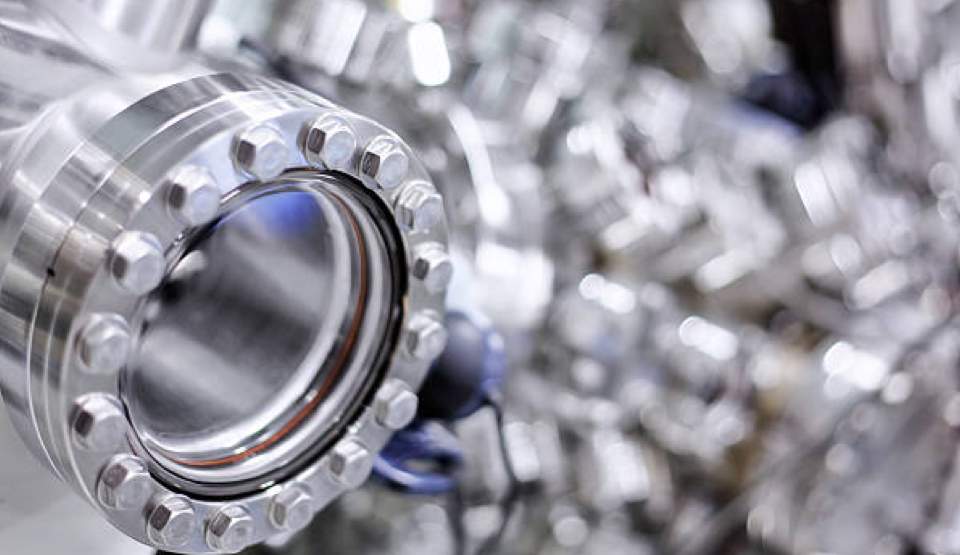
Surface Plasmon Resonance (SPR)
SPR provides real-time, label-free measurement of the kinetic and thermodynamic parameters that govern molecular interactions. Using minimal sample quantities, SPR characterizes binding between small molecules, peptides, antibodies, and protein partners, generating critical data for target characterization, hit validation, lead optimization, and assessment of target engagement.

Bio-Layer Interferometry (BLI)
BLI is a powerful tool that provides rapid, real-time, label-free analysis of biomolecular interactions, enabling detection, quantification, and kinetic characterization across a range of biologically relevant matrices. At IRBM, BLI supports high-throughput screening of small molecules and is crucial for high throughput antibody screening, delivering rapid affinity-based hit identification and epitope binning to guide antibody discovery and lead selection.

NMR
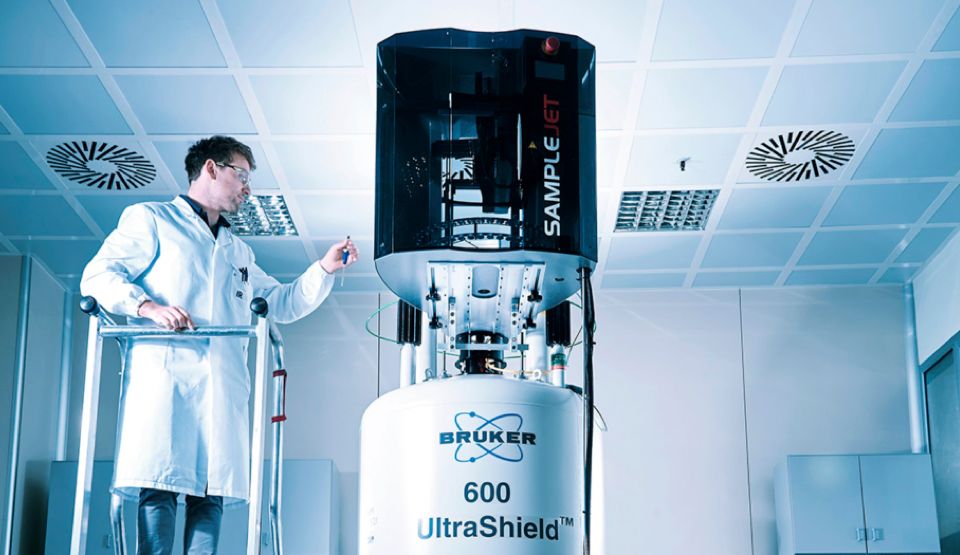
Nuclear Magnetic Resonance (NMR) spectroscopy provides structural and dynamic information from small molecules to peptides and protein complexes. When the binding site itself becomes the key question, our Structural Biology NMR group delivers the detailed molecular insight needed to guide hit validation, lead optimization, and mechanism-of-action studies.
Start with one measurement
One target, one measurement, one number that tells chemistry where to go next. Start there, or bring biophysics into an integrated program at a single research site.
Questions we are asked
Which technique do you use, SPR or BLI?
Sample availability, throughput requirements, and matrix complexity determine the best approach. SPR delivers detailed kinetic, affinity, and thermodynamic data from small sample quantities. BLI supports higher-throughput screening and performs well with complex biological matrices. Many programs use both to balance depth of characterization with screening efficiency.
Can you work with a protein we supply?
Yes. Protein can be supplied by you or produced at IRBM. Whichever route is chosen, the protein is characterized before binding measurements begin to ensure data quality and assay performance. Protein Production
Can you measure binding in complex biological matrices?
Yes, by BLI, which detects, quantifies and determines the kinetics of biomolecular interactions across a range of complex biological matrices.
Start a conversation.
Great science begins here.